What a GPT or Claude Integration Actually Adds to Your App is a model-powered capability for generating responses, analyzing content, writing code, and sometimes using connected tools within developer-defined controls. ChatGPT can connect with services including Spotify, Canva, Uber, and DoorDash, while Zapier is reported to connect it to more than 8,000 tools. Claude can also support reported codebase and design actions when configured with suitable permissions.
- ChatGPT and Claude can draft, summarize, brainstorm, analyze, and edit.
- Claude’s standard configuration is reported to process up to 200,000 tokens per request.
- GPT-5.5 is listed at $5 per million input tokens and $30 per million output tokens.
- OpenAI may retain API inputs and outputs for up to days for abuse monitoring.
- Claude Code is reported to inspect project files, modify code, run tests, and commit changes to GitHub.
What a GPT or Claude Integration Actually Adds to Your App: What does integrating GPT or Claude add to an app compared with using its existing features without an AI model?
What a GPT or Claude Integration Actually Adds to Your App is a model-powered layer that can generate content or responses from prompts, rather than only exposing an ordinary, preconfigured feature. Agentic systems go further: they can plan, use tools, and execute multi-step tasks within guardrails and human oversight.
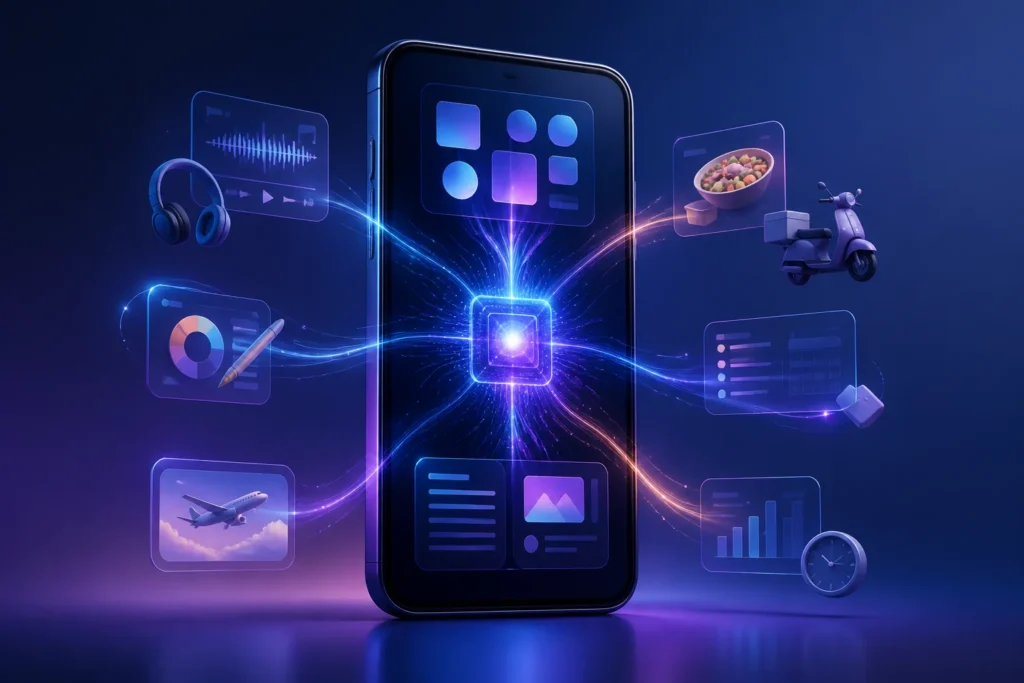
What a GPT or Claude Integration Actually Adds to Your App can include application integration and in-app actions. The supplied evidence lists connections involving Spotify, Canva, Uber, and DoorDash, plus more than 8,000 tools through Zapier. Claude is also reported to edit a Figma design or update a project timeline from the Claude window.
For AI Build Desk projects, What a GPT or Claude Integration Actually Adds to Your App depends on the workflow you define: a custom AI chatbot, support workflow, lead-qualification system, knowledge system, or other AI-powered application. Built-in integrations are described as preconfigured connections that administrators can share across apps.

Which app tasks can GPT and Claude handle, such as answering questions, summarizing content, or generating text?
What a GPT or Claude Integration Actually Adds to Your App includes shared work such as drafting, summarizing, brainstorming, analysis, and editing. ChatGPT and Claude can process text, write code, work with images, and perform complex analytical tasks. Both can also generate and debug code, write scripts, and help with software questions.
What a GPT or Claude Integration Actually Adds to Your App may look different by workflow. ChatGPT is described for emails, outlining, code explanation, planning, brainstorming, and files. Claude is described for long documents, careful editing, policy review, proposals, structured reasoning, and tone-sensitive writing.
What a GPT or Claude Integration Actually Adds to Your App can include research support: Claude Research Mode is reported to browse the web and internal Box files for minutes to create a cited report. Developer productivity uses include code generation, debugging, explanation, documentation, and technical problem-solving. Kuali describes Chat GPT Pro as suited to complex form-input processing and document analysis.
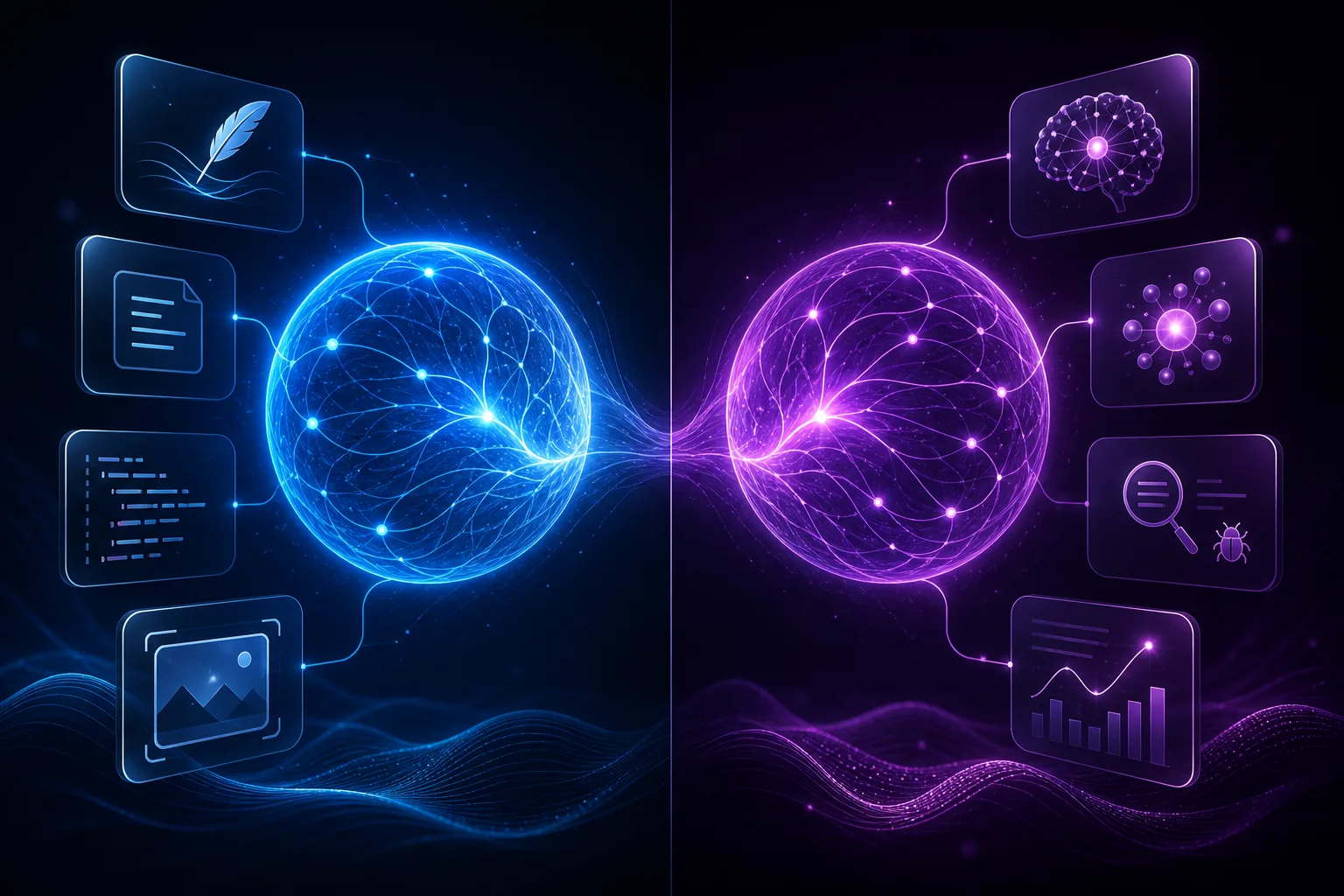
How do GPT and Claude differ in capabilities, context limits, latency, and support for tools or images?
What a GPT or Claude Integration Actually Adds to Your App depends partly on context and speed. A context window is the amount of information a model can process in one interaction, while latency is the time between submitting a prompt and receiving a response.
What a GPT or Claude Integration Actually Adds to Your App should therefore be assessed against the selected model and tier. Claude’s standard configuration is reported at up to 200,000 tokens per request, while Sonnet 4.5 is reported at million tokens in beta or enterprise contexts. GPT 5.2 is reported at 400,000 tokens through the API. Another cited comparison says all three models offer 1-million-token context windows, so published figures should be checked against the exact product configuration.
What a GPT or Claude Integration Actually Adds to Your App also varies for images and tools. Claude can analyze visual data and image text but cannot generate images. GPT-5.1 is described as supporting image generation, video creation, voice interaction, UI interpretation, screenshot-to-code workflows, and real-time multimodal reasoning. Context, latency, multimodal support, enterprise features, and integrations vary by model version and tier. Anthropic’s Model Context Protocol is described as an open standard connecting models to external tools and data sources.

How is a GPT or Claude integration connected to an app using an API, and what data must the app send to the model?
What a GPT or Claude Integration Actually Adds to Your App starts with a defined user, input, and desired outcome, followed by a risk assessment. Proprietary models such as ChatGPT and Claude are typically accessed through managed applications, APIs, or cloud services.
What a GPT or Claude Integration Actually Adds to Your App requires a data flow. The app sends the end-user request and can add optional variables; Kuali’s standard ChatGPT integration describes the input as the end-user request and permits up to three optional form-data variables. Kuali’s Claude integration is reported to connect five variables to other form gadgets.
What a GPT or Claude Integration Actually Adds to Your App can use Claude’s RESTful API at api.anthropic.com and its Messages API endpoint, POST /v1/messages. Claude API access requires a Claude Console account and an API key or configured Workload Identity Federation rule. Anthropic’s official SDKs handle authentication, request formatting, error handling, and other integration tasks. The evidence doesn’t establish OAuth scopes, encryption details, OpenAI Apps SDK implementation, MCP server setup, or support for Slack, Asana, Gmail, Google Drive, Apple Health, or other named connectors. Verify those details for the chosen platform.
How much does a GPT or Claude integration cost per request, and what factors affect the total monthly cost?
What a GPT or Claude Integration Actually Adds to Your App is priced according to token use, and cost often depends on whether the workload is input-heavy or output-heavy. GPT-5.5 is listed at $5 per million input tokens and $30 per million output tokens.
What a GPT or Claude Integration Actually Adds to Your App can have different per-token economics by model. Claude Haiku 4.5 is listed at $1 per million input tokens and $5 per million output tokens, while Claude Opus 4.5 is listed at $5 per million input tokens and $25 per million output tokens. The comparison table below presents those reported prices.
What a GPT or Claude Integration Actually Adds to Your App also carries operational costs. Request volume, context packing, generated-output length, model choice, support requirements, scalability, and integrations can affect the monthly total. Claude’s asynchronous Message Batches API is described as offering a 50% cost reduction for large volumes. Its Token Counting API can estimate message tokens before sending requests, while usage is subject to request-per-minute and token-per-minute limits.
What privacy, security, accuracy, and compliance risks should developers address when adding GPT or Claude to an app?
What a GPT or Claude Integration Actually Adds to Your App includes a data-governance decision. OpenAI may retain API inputs and outputs for up to days for abuse monitoring, while Anthropic retains Claude API logs for seven days before automatic deletion. The cited evidence says Claude API logs are never used for model training, and zero-data-retention options are available to eligible enterprise customers.
What a GPT or Claude Integration Actually Adds to Your App should be reviewed against privacy agreements before you send proprietary, client, or regulated data through an API or enterprise tier. Sensitive categories include customer records, confidential strategy, legal documents, HR data, financial records, source code, credentials, and regulated information.
What a GPT or Claude Integration Actually Adds to Your App needs human review for production code and factual or customer-facing outputs. The supplied evidence advises against relying on either model alone for legal, medical, financial, compliance, hiring, security, safety, or business-critical decisions. Encryption specifications, OAuth permission scopes, compliance certifications, rollback controls, and named third-party app data permissions aren’t established by the supplied evidence.


Can a GPT or Claude integration build or modify an app on its own, or does it only perform AI tasks within features developers create?
What a GPT or Claude Integration Actually Adds to Your App depends on whether developers create only a model feature or an agentic system. Generative AI produces content or responses from prompts; agentic AI is designed to plan, use tools, and execute multi-step tasks within guardrails and human oversight.
What a GPT or Claude Integration Actually Adds to Your App can include codebase actions when suitable tools and permissions exist. Claude Code is reported to inspect project files, modify a codebase, run tests, and commit changes to GitHub through natural-language commands. Claude Code also asks for permission before making changes or running commands.
What a GPT or Claude Integration Actually Adds to Your App does not, based on the available claims, prove that GPT or Claude independently conceives, deploys, maintains, or safely rolls back an entire application. Those outcomes would require developer-created tools, permissions, review, and operational controls. Permission prompts are one safeguard, not evidence that every consequential action is safe.
How can an app team test whether a GPT or Claude integration improves a feature before releasing it to users?
What a GPT or Claude Integration Actually Adds to Your App should be tested on real work rather than judged from demonstrations. Build task-based evaluations around accuracy, clarity, usefulness, review time, and fit with your team’s voice.
What a GPT or Claude Integration Actually Adds to Your App can be measured in a defined workflow, such as support answers, document summaries, code assistance, or form-input processing. Those cases align with reported drafting, summarizing, coding, debugging, document-analysis, and technical problem-solving capabilities.
What a GPT or Claude Integration Actually Adds to Your App should also be tested against ambiguous requests, incorrect or hallucinated answers, stale data, API failures, rate limits, partial task completion, and consequential actions. The supplied evidence provides no measured failure rates, so these are evaluation cases rather than statistics. For an AI Build Desk project brief, define the task, permitted data, approval points, success measures, monitoring plan, and human fallback before choosing GPT, Claude, or another model.

| Model | Input price | Output price |
|---|---|---|
| GPT-5.5 | $5 per million input tokens | $30 per million output tokens |
| Claude Haiku 4.5 | $1 per million input tokens | $5 per million output tokens |
| Claude Opus 4.5 | $5 per million input tokens | $25 per million output tokens |
Key Takeaways
- Define the user, inputs, desired outcome, permitted data, and approval points before implementation.
- Compare model pricing using both input and output token volumes.
- Review provider retention and privacy terms before sending proprietary, client, or regulated data.
- Test real workflows for accuracy, usefulness, review time, failures, stale data, and partial completion.
- Keep human review for production code, factual outputs, customer-facing content, and consequential decisions.
Frequently Asked Questions
Can ChatGPT build apps like Claude?
The supplied evidence doesn’t establish that ChatGPT can independently build apps in the same way as Claude Code. Claude Code is reported to inspect files, modify code, run tests, and commit changes to GitHub through natural-language commands.
What does GPT stand for and what does it do?
The supplied evidence doesn’t define what GPT stands for. It describes ChatGPT as handling tasks such as drafting emails, outlining ideas, explaining code, planning, brainstorming, and working with files.
Is it legal to use AI to build an app?
The supplied evidence doesn’t establish whether using AI to build an app is legal. Legal, compliance, privacy, and data-permission requirements should be reviewed for the specific project, especially when sensitive or regulated information is involved.
Should I connect Claude to Gmail?
The supplied evidence doesn’t establish Claude’s Gmail support or the permissions it would require. Verify the chosen platform’s data permissions, connector support, and privacy terms before connecting Claude to Gmail.