How to Build a Custom AI Chatbot Without Coding means choosing a no-code builder such as CustomGPT.ai, Landbot, ManyChat, or Botsonic, adding business knowledge, designing and testing a conversation flow, then connecting the bot to a website, channel, or business tool. Costs range from free-plan testing to $20 monthly for ChatGPT Plus and higher usage or enterprise costs.
- CustomGPT.ai, Landbot, ManyChat, and Botsonic by Writesonic are named as no-code chatbot builders.
- Tidio's free plan supports up to visitors per month.
- ChatGPT Plus costs $20 per month, and a ChatGPT-based chatbot needs a third-party platform such as Zapier, Tidio, or Make.com.
- Supported knowledge sources include PDF, DOCX, TXT, CSV, HTML, XML, JSON, audio, video, and public website URLs, with a 100MB limit per file.
- Chatbot intent-recognition accuracy should exceed 85%.
How to Build a Custom AI Chatbot Without Coding: What is a custom AI chatbot?
A custom AI chatbot uses data to produce more natural responses, while a rule-based chatbot follows predefined rules for tasks such as FAQs and common queries. How to Build a Custom AI Chatbot Without Coding starts with choosing the business problem rather than building a model.
Generative AI chatbots use large language models and adapt to situations to provide personalized responses. Rule-based systems give predefined replies, while AI chatbots can use natural-language processing and machine learning to understand context, learn from chats, personalize interactions, and handle difficult queries. How to Build a Custom AI Chatbot Without Coding can therefore mean configuring a purpose-built business bot rather than creating a general-purpose assistant.
APIs from OpenAI, Cohere, or Hugging Face can handle natural-language processing, so you don't need to build a model from scratch. Supported goals include reducing support tickets, generating leads, increasing conversions, answering queries, and supporting customers. How to Build a Custom AI Chatbot Without Coding is chiefly a configuration and testing exercise.

Which no-code chatbot platforms should you compare, and what features determine whether a platform fits your use case?
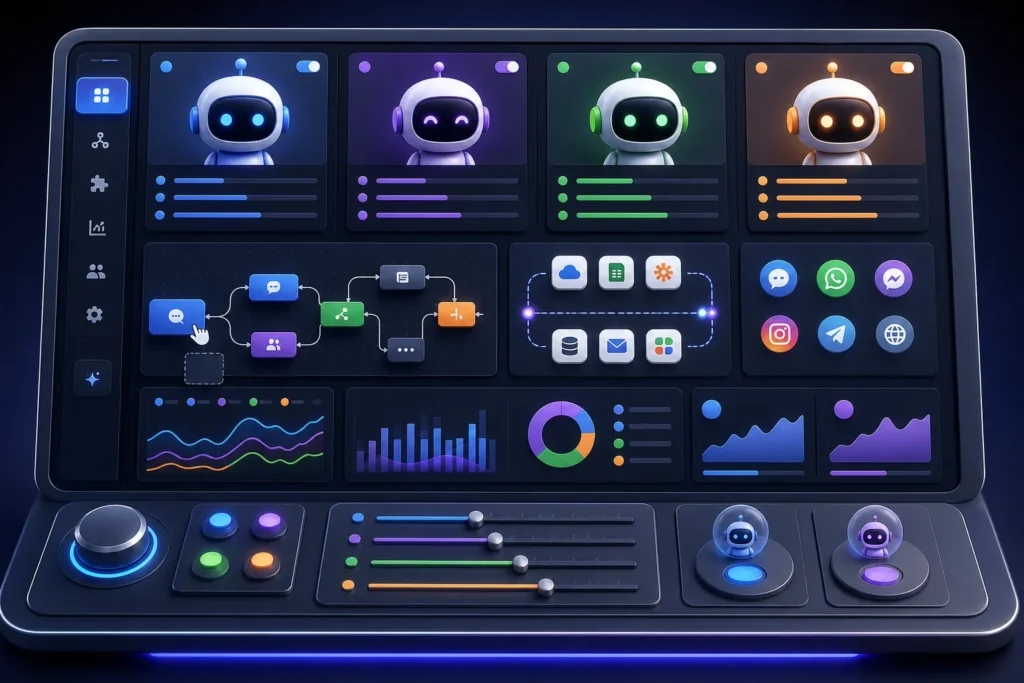
No-code chatbot builders worth comparing include CustomGPT.ai, Landbot, ManyChat, and Botsonic by Writesonic. When you ask how to build a custom AI chatbot without coding, compare integrations, supported channels, and pricing fit before choosing a platform.
| Platform or option | What the ledger establishes |
|---|---|
| CustomGPT.ai | Named as a no-code chatbot builder |
| Landbot | Named as a no-code chatbot builder |
| ManyChat | Named as a no-code chatbot builder |
| Botsonic by Writesonic | Named as a no-code chatbot builder |
Look for a visual drag-and-drop flow builder, A/B testing, real-time analytics, and template libraries. ChatbotBuilder.net is described as offering drag-and-drop flow design and analytics showing where conversations break down. HubSpot integrates with its CRM but offers fewer customization options than many alternatives.
Platform choice should reflect target-user location and interface complexity. Estimate expected customer and query volume before selecting a plan. That is the practical shape of how to build a custom AI chatbot without coding: match the builder to users, workflows, channels, and scale. How to Build a Custom AI Chatbot Without Coding is not a reason to ignore those trade-offs.
How much does it cost to build and run a no-code AI chatbot, and what limits apply to free plans?
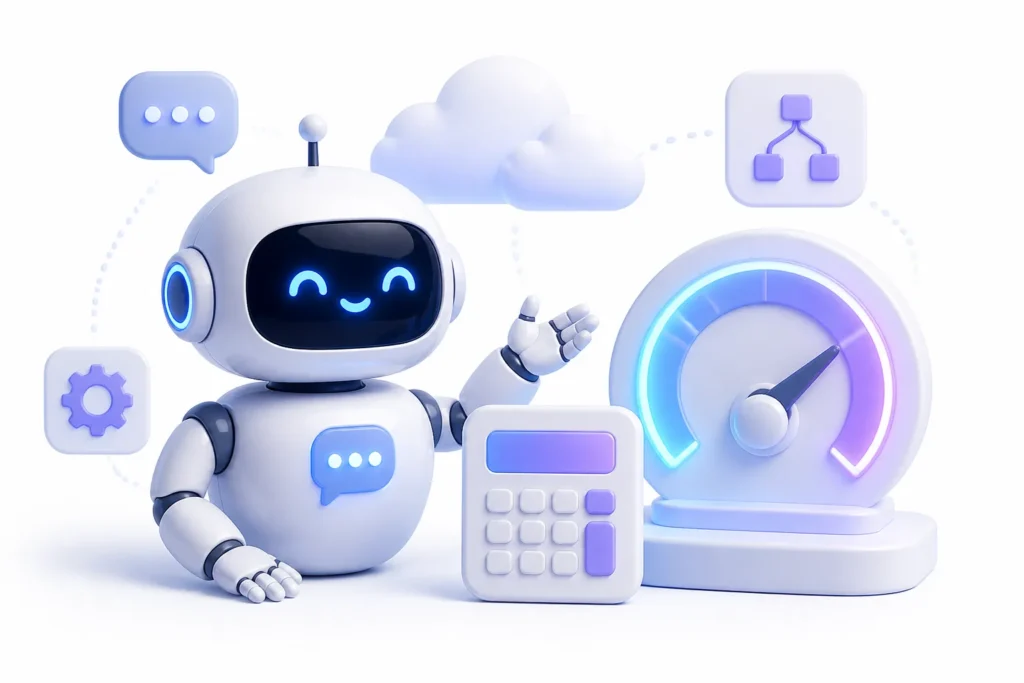
No-code chatbot costs range from limited free testing to usage-based or enterprise pricing, so how to build a custom AI chatbot without coding also requires a budget decision. Free SaaS plans may restrict conversations and are generally better for testing than permanent use.
Documented free limits differ: Tidio supports up to visitors per month, Zapier performs tasks per month, and Dialogflow allows up to 1,000 requests per month. ChatGPT Plus costs $20 per month, and a ChatGPT-based chatbot must connect to a third-party platform such as Zapier, Tidio, or Make.com.
Standard plans commonly cover to 1,000 conversations or unique customers. Enterprise chatbot plans are reported at $399 to more than $4,000 per month, while Intercom charges $0.99 per conversation for its AI chatbots in its suite or a small list of other CRMs. One source reports a custom AI chatbot price of $100,000 to $200,000.
Total cost depends on platforms, third-party APIs, integrations, testing, customization, security, and compliance requirements. How to Build a Custom AI Chatbot Without Coding means reducing technical work, not eliminating operating costs.
What steps do you follow to define the chatbot’s purpose, add knowledge sources, design its conversation flow, and publish it?
Define one primary goal before you build: reducing support tickets, generating leads, or increasing conversions. Choose the chatbot type and price around that business goal. That is the first step in how to build a custom AI chatbot without coding.
Gather FAQs, product documents, and knowledge-base content. Supported source examples include PDF, DOCX, TXT, CSV, HTML, XML, JSON, audio, video, and public website URLs, with a cited limit of 100MB per file. Then map common customer questions, decision-tree options, chatbot triggers, opening messages, fallback responses, and human handoffs. An opening trigger initiates the flow and supplies the introductory message users see when they start a chat.
Interview customers about their problems in their own words. Keep messages to no more than three sentences, two questions, and one clear next step. Move users from engagement and information sharing toward personal details, scheduling, or purchase.
Before publishing, run team conversations, remove confusing replies, check greetings and handoffs, then measure drop-off data after one week. How to Build a Custom AI Chatbot Without Coding ends with measurement, not publication alone.
How can you connect a no-code chatbot to your website, messaging channels, or business tools?
A no-code chatbot can be deployed on a website, social media, mobile app, or customer portal. Choose the channel where your target users are located, because platform choice depends partly on user location and interface complexity. How to build a custom AI chatbot without coding therefore includes channel planning.
Messaging options include WhatsApp and Facebook Messenger. Telegram, Discord, Slack, and web-based chat interfaces are also identified as interface options. A website can use a web chat widget, while business connections can include CRM systems and third-party order-management software for order tracking.
Telegram offers a concrete setup path: search for @botfather, create a bot, and copy its key. That example shows why integration work still needs careful credential handling and testing.
Deployment costs rise with the platforms and third-party APIs selected. An existing system such as Salesforce may require testing and customization, with compliance and security costs considered as part of the work. How to Build a Custom AI Chatbot Without Coding can simplify the interface, but it doesn't remove these integration decisions.


What privacy, security, and accuracy risks should you address when training, testing, and deploying a custom chatbot?
Training data quality directly affects chatbot performance, so keep uploaded material clean and relevant. When deciding how to build a custom AI chatbot without coding, define which documents the bot may use, who can access them, and how conversations should be handled; the ledger does not specify a general retention policy.
After each content batch, test to representative customer questions and track answer accuracy, citation hit rate, and refusal rate. Simulate user journeys, check triggers and menu buttons, and test third-party integrations before launch.
Protect credentials and sensitive data. Databutton is described as storing necessary API keys securely in its storage. Compliance and security requirements can add cost, including requirements associated with GDPR, HIPAA, or SOC 2. Existing-system integrations may also require testing and customization.
Set clear limits, fallback responses, and human escalation for uncertain or unresolved requests. Check handoffs and refusal behavior, and use intent-recognition accuracy above 85% as a measurable target. How to Build a Custom AI Chatbot Without Coding safely means testing what the system should not answer as well as what it can answer.
How can you expand a no-code chatbot into an AI agent that performs tasks, and what integrations does it need?
An AI chatbot answers questions, while an AI agent can perform connected tasks such as retrieving an order status through a third-party order-management system. How to build a custom AI chatbot without coding becomes an agent project when the system must act across business tools.
Agent-style workflows need connections to systems such as CRMs, messaging channels, websites, and other third-party tools. Use prompt-driven development by stating the backend's purpose, inputs, and outputs, then request a backend plan and execution steps. Test the generated endpoint and use debugging support if the test fails.
Retrieval-augmented generation can support AI-powered chat on business data with OpenAI through prompts. The implementation brief should clarify the task, required systems, data sources, handoff rules, testing measures, and expected costs before you seek help from AI Build Desk, which helps businesses plan and build practical AI applications without an in-house AI development team.
No evidence-backed price or integration list is available for every possible agent use case. How to Build a Custom AI Chatbot Without Coding is therefore a project brief, not a universal recipe.

| Plan or product | Reported cost |
|---|---|
| ChatGPT Plus | $20 per month |
| Intercom AI chatbots | $0.99 per conversation |
| Enterprise chatbot plans | $399 to more than $4,000 per month |
| A custom AI chatbot | $100,000 to $200,000 |
| Chatbot or setup | Data or input information stated |
|---|---|
| CustomGPT.ai | PDF, DOCX, TXT, CSV, HTML, XML, JSON, audio, video, and public website URLs as… |
| E-commerce chatbot | Product brochures as an example of training data |
| Healthcare chatbot | Medical databases |
| AI-powered chat setup | Business data with OpenAI and retrieval-augmented generation through prompts |
| Platform | Ledger-supported comparison point |
|---|---|
| CustomGPT.ai | Named as a no-code chatbot builder |
| Landbot | Named as a no-code chatbot builder |
| ManyChat | Named as a no-code chatbot builder |
| Botsonic by Writesonic | Named as a no-code chatbot builder |
Key Takeaways
- Start with one measurable goal, such as support-ticket reduction, lead generation, or increased conversions.
- Compare builders by integrations, channels, pricing, flow design, analytics, and expected query volume.
- Treat free plans as testing options unless their conversation limits fit your use case.
- Use clean knowledge sources, representative questions, fallback responses, and human handoffs.
- Define systems, data sources, testing measures, and expected costs before expanding to an AI agent.
Frequently Asked Questions
Can I make my own AI chat bot?
Yes. You can make your own AI chatbot with a no-code chatbot builder, uploaded FAQs or product documents, a conversation flow, and a selected deployment channel. APIs from OpenAI, Cohere, or Hugging Face can provide natural-language processing without building a model from scratch.
Which AI does Elon Musk use?
The ledger doesn't identify which AI Elon Musk uses.
Can you legally marry a chatbot?
The ledger provides no information about whether you can legally marry a chatbot.
How to build an AI agent with no code?
You can build an AI agent without code by defining its purpose, inputs, and outputs, asking for a backend plan, testing the generated endpoint, and connecting business systems such as CRMs, messaging channels, websites, or other third-party tools.